Antenna TV Guide: Corpus Christi, TX ─ A Comprehensive Overview (December 22, 2025)
Discover free, over-the-air television in Corpus Christi! Our guide details 44 digital channels, including NBC, ABC, FOX, and CBS affiliates, available today, December 22, 2025.
Understanding Over-the-Air TV in Corpus Christi
Over-the-air (OTA) television in Corpus Christi, Texas, offers a fantastic alternative to expensive cable or satellite subscriptions. Utilizing a digital antenna, residents can access a wealth of free-to-air channels, encompassing local news, popular network programming, and engaging entertainment. As of today, December 22, 2025, approximately 44 digital TV channels are broadcasting within the Corpus Christi area, providing a diverse viewing experience.
This method relies on receiving broadcast signals transmitted from local television stations. Unlike streaming services, OTA TV doesn’t require internet connectivity, ensuring uninterrupted viewing even during outages. The availability of channels depends on factors like antenna type, location, and signal strength. A comprehensive understanding of these elements is crucial for optimizing your viewing experience in Corpus Christi’s unique broadcast landscape.
The Benefits of Using an Antenna
Switching to an antenna for television reception in Corpus Christi unlocks numerous advantages. The most significant benefit is cost savings – eliminating monthly cable or satellite bills. Access to up to 44 free digital channels, including local networks like NBC, ABC, FOX, and CBS, provides a robust viewing selection without subscription fees. Furthermore, OTA TV offers superior picture and sound quality compared to many streaming services, delivering a truly immersive experience.
Antennas also provide reliable access to local news and emergency broadcasts, independent of internet connectivity. This is particularly valuable during severe weather events or service disruptions. Enjoying your favorite shows without buffering or data caps is another key advantage. Embracing antenna TV is a smart, economical, and high-quality entertainment solution for Corpus Christi viewers.
Available Digital TV Channels in Corpus Christi
Corpus Christi residents have access to a diverse range of digital TV channels via antenna. Currently, we’ve identified 44 channels broadcasting within the area, encompassing major networks and specialty programming. These include local affiliates such as KRIS-TV (NBC), KIII-TV (ABC), KZTV (FOX), and KMPT (MyNetworkTV). Beyond these primary channels, viewers can enjoy a variety of subchannels offering news, sports, lifestyle content, and more.
Channel availability can vary based on location and antenna type, but the potential for free, over-the-air television is substantial. Regularly scanning for channels ensures you receive the most up-to-date listings. This comprehensive selection provides a compelling alternative to paid television services, offering entertainment for every viewer in Corpus Christi.
Local Broadcast Stations: A Detailed List
Corpus Christi is served by several key broadcast stations delivering a variety of programming. KRIS-TV (Channel 6) brings you NBC’s lineup of news, sports, and entertainment. KIII-TV (Channel 3) is your local ABC affiliate, offering similar content. For FOX programming, tune into KZTV (Channel 10), providing popular shows and live events. KMPT (Channel 44) delivers MyNetworkTV’s diverse range of series and movies.
These stations are the cornerstone of over-the-air television in the region. Each station also broadcasts multiple digital subchannels, expanding viewing options. Regularly checking station websites provides detailed program schedules and local news updates. Utilizing an antenna allows residents to access these stations completely free of charge, offering a valuable alternative to cable or satellite subscriptions.
KRIS-TV (NBC) ─ Channel 6
KRIS-TV, broadcasting on Channel 6, proudly serves the Corpus Christi area as the local NBC affiliate. Viewers can expect a comprehensive schedule featuring NBC’s nationally recognized news programs, including Today and NBC Nightly News, alongside popular entertainment series and live sports coverage. Local news programming is a cornerstone of KRIS-TV’s commitment to the community, providing up-to-date reports on regional events and weather.
As a digital broadcaster, KRIS-TV also offers multiple subchannels, expanding content beyond the main NBC feed. Accessing KRIS-TV via an antenna provides a high-quality, free viewing experience. Regularly checking their website, kris6.com, will provide the most current program listings and local news updates for Corpus Christi viewers.
KIII-TV (ABC) — Channel 3
KIII-TV, the ABC affiliate for Corpus Christi, broadcasts on Channel 3, delivering a diverse range of programming to local households. Viewers can enjoy ABC’s primetime lineup, including acclaimed dramas, comedies, and reality shows, alongside local news broadcasts dedicated to serving the Coastal Bend region. KIII-TV’s commitment to local journalism ensures residents stay informed about important community events and breaking news.
Beyond network programming, KIII-TV often features local sports coverage and community-focused initiatives. Utilizing a digital antenna allows Corpus Christi residents to access KIII-TV’s signal without subscription fees. For the most up-to-date program schedules and local news, visit their website, kiii3.com, ensuring you don’t miss your favorite shows.
KZTV (FOX) — Channel 10
KZTV proudly serves Corpus Christi as the local FOX affiliate, broadcasting on Channel 10. Viewers can access popular FOX network programming, including prime-time shows, live sports events, and engaging entertainment. Beyond national broadcasts, KZTV dedicates itself to delivering comprehensive local news coverage, keeping the Coastal Bend community informed about vital happenings and breaking stories.
KZTV’s commitment extends to local events and community partnerships, strengthening its connection with the region. Utilizing a digital antenna provides Corpus Christi viewers with free access to KZTV’s signal, eliminating the need for costly cable or satellite subscriptions. For detailed program schedules and local news updates, visit their official website, ensuring you stay connected to the content you enjoy.
KMPT (MyNetworkTV) ─ Channel 44
KMPT, broadcasting on Channel 44, brings MyNetworkTV programming to the Corpus Christi area. This station offers a diverse lineup, featuring a mix of acquired series, movies, and original entertainment. KMPT caters to viewers seeking alternative programming options beyond the major networks, providing a unique viewing experience.
Accessing KMPT’s signal is simple with a digital antenna, offering a cost-effective alternative to traditional pay-television services. Local viewers can enjoy KMPT’s content without monthly fees or contracts. The station also frequently broadcasts local programming and community events, further enriching its appeal. For the most up-to-date schedule and local broadcast information, consult KMPT’s official website, ensuring you don’t miss your favorite shows.
Channel Frequency and Signal Strength Maps
Optimizing your antenna setup in Corpus Christi requires understanding channel frequencies and signal strength. Accurate maps are crucial for determining the best antenna type and placement. These resources visually represent broadcast tower locations and predicted signal coverage areas throughout the region.
Utilizing these maps, viewers can identify the strongest signals available at their specific address. Factors like distance from transmitters, obstructions (buildings, trees), and terrain significantly impact reception. Online tools and resources provide detailed frequency information for each Corpus Christi channel, allowing for precise antenna tuning. Regularly updated maps ensure accuracy, reflecting changes in broadcast power or tower locations. Consulting these maps is the first step towards reliable, free over-the-air television.
Antenna Types: Choosing the Right One for Your Location
Selecting the appropriate antenna is vital for optimal reception in Corpus Christi. Indoor antennas are ideal for urban areas with strong signals, offering convenience and ease of installation. These are typically smaller and less expensive, suitable for closer proximity to broadcast towers. However, signal strength can be limited by building materials and interference.
Outdoor antennas, conversely, maximize range and signal reception, particularly in suburban or rural locations. They come in various sizes and designs, including directional and omnidirectional models. Directional antennas focus on specific broadcast towers, while omnidirectional antennas receive signals from multiple directions. Careful consideration of your location, distance to towers, and potential obstructions will guide your antenna choice, ensuring a clear and reliable viewing experience.
Indoor Antennas: Best for Urban Areas
For Corpus Christi residents in urban settings, indoor antennas present a convenient and cost-effective solution for accessing free over-the-air television. These antennas are designed to capture signals reflected within cityscapes, where broadcast towers are generally closer and line-of-sight isn’t always obstructed. They are easily installed, requiring no outdoor mounting or cabling expertise.
However, performance varies based on building construction and proximity to transmitters. Materials like concrete and metal can attenuate signals. Flat, multi-directional models are popular, offering broad reception, while amplified antennas boost weaker signals. Regularly scanning for channels is recommended to optimize your viewing experience. Indoor antennas are perfect for apartments, condos, and homes close to broadcast sources, providing a simple path to free TV.
Outdoor Antennas: Maximizing Range and Signal
For Corpus Christi viewers located further from broadcast towers, or those experiencing signal challenges due to terrain or obstructions, outdoor antennas are the superior choice. These antennas, mounted on roofs or masts, offer significantly increased range and signal strength compared to indoor models. Directional antennas, pointed towards specific transmitter locations, excel at pulling in distant signals.
Proper installation is crucial, including grounding for safety and precise aiming. Larger Yagi-Uda antennas provide high gain, while multi-bay antennas offer broader coverage. Amplifiers can further enhance weak signals, but careful consideration is needed to avoid signal overload. Outdoor antennas require more effort to install, but deliver the most reliable and comprehensive free TV experience, especially in suburban and rural areas.
Factors Affecting Signal Reception
Several elements influence the quality of your over-the-air TV signal in Corpus Christi. Distance from broadcast towers is paramount; the further you are, the weaker the signal. Obstructions like buildings, dense trees, and hilly terrain can block or weaken signals, causing pixelation or complete signal loss. Even atmospheric conditions can play a role, though this is typically less impactful.
Indoor antenna placement matters – avoid basements and areas shielded by metal objects. Outdoor antenna height and direction are critical for maximizing reception. Interference from other electronic devices is rarely a major issue with digital signals, but can occasionally occur. Understanding these factors allows viewers to optimize antenna placement and selection for the best possible viewing experience.
Distance from Broadcast Towers
Signal strength diminishes with distance from Corpus Christi’s broadcast towers. Viewers located further away will experience weaker signals, potentially leading to picture quality issues like pixelation or complete signal loss; A stronger antenna, potentially an outdoor model, becomes increasingly necessary as distance increases. Utilizing a TV transmitter map is crucial for determining your proximity to each station’s broadcast origin.
Generally, signals within a 35-mile radius are considered reliable for indoor antennas, while distances exceeding this often require outdoor antennas for optimal reception. However, terrain and obstructions significantly impact this guideline. Even at shorter distances, obstructions can mimic the effects of greater distance, necessitating a more powerful antenna setup; Careful consideration of distance is vital for a successful antenna setup.
Obstructions: Buildings, Trees, and Terrain
Signal reception in Corpus Christi is heavily influenced by obstructions. Buildings, dense foliage like trees, and even hilly terrain can block or weaken broadcast signals. Metallic structures, including buildings with metal siding, are particularly problematic, reflecting signals away from your antenna. Trees, especially when wet, absorb signal strength, reducing reception quality.

Line of sight is paramount; a clear, unobstructed path between your antenna and the broadcast tower yields the best results. Consider antenna placement – higher locations generally offer better clearance. Outdoor antennas, elevated above rooftops, often overcome these obstacles. Terrain variations can create “shadow zones” where signals are weak or nonexistent, requiring strategic antenna positioning or a more powerful antenna.
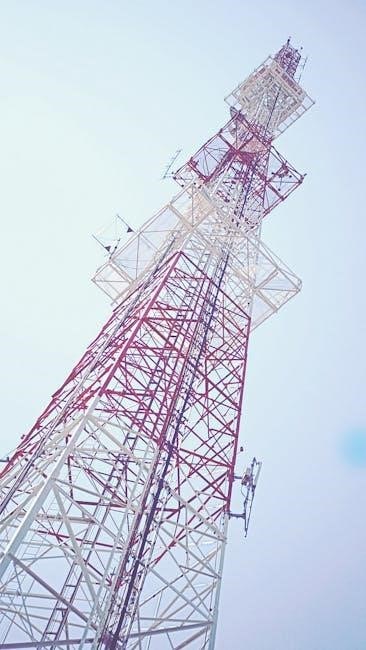
TV Transmitter Map for Corpus Christi, TX 78411
Locating broadcast towers is crucial for optimal reception in Corpus Christi. A TV antenna transmitter map visualizes these locations, aiding antenna aiming. For the 78411 zip code, understanding tower positions relative to your home is key. Currently, we’ve identified 10 TV stations broadcasting within the area, transmitting on various channels.
These maps detail technical information per channel, including frequency and power output. Utilizing online resources and tools, viewers can pinpoint tower locations and determine the signal strength expected at their address. Proper antenna direction, aligned with these transmitter locations, maximizes signal capture. Remember, obstructions impact signal paths, so map data must be considered alongside terrain and building layouts.
Free TV Channels Available with an Antenna
Enjoy a wealth of free entertainment with an antenna in Corpus Christi! Currently, viewers can access up to 91 available channels, bypassing costly cable or satellite subscriptions. This includes major networks like NBC (KRIS-TV Channel 6), ABC (KIII-TV Channel 3), FOX (KZTV Channel 10), and MyNetworkTV (KMPT Channel 44).
Beyond these core channels, discover local programming, news, and sports broadcasts. Digital TV allows for clearer picture and sound quality. Regularly scanning for available channels ensures you receive the most up-to-date listings. An antenna TV guide simplifies this process, providing a comprehensive overview of free content. Explore the possibilities and reclaim your entertainment budget!
Local Listings and Program Guides
Staying informed about local broadcasts in Corpus Christi is easy! While a traditional printed TV guide is becoming less common, numerous online resources provide detailed program listings for over-the-air channels. Websites dedicated to antenna TV offer schedules for KRIS-TV, KIII-TV, KZTV, and KMPT, allowing you to plan your viewing.
Furthermore, many station websites (kristv.com,kiiitv.com,kztv10.com) publish their daily and weekly schedules directly. Utilizing these digital guides ensures you never miss local news, sports events, or your favorite network shows. Remember to check listings frequently, as schedules can change. Embrace the freedom of free TV and explore the diverse programming available in your area!
Corpus Christi TV Market Overview
Corpus Christi represents a vibrant and competitive television market, serving a diverse population across South Texas. The area is primarily served by the major broadcast networks – NBC (KRIS-TV), ABC (KIII-TV), FOX (KZTV), and MyNetworkTV (KMPT). These stations deliver a mix of local news, entertainment programming, and national network content.
Currently, approximately 10 TV stations broadcast 44 digital channels within the region. This provides viewers with a substantial selection of free, over-the-air programming options. The market’s reliance on antenna reception remains significant, offering an alternative to costly cable or satellite subscriptions. Understanding the local TV landscape empowers residents to maximize their viewing experience and access valuable information.
Understanding Digital TV Transition
The transition to digital television (DTV) significantly impacted Corpus Christi viewers, offering improved picture and sound quality. This shift, completed years ago, required viewers to either upgrade to digital-compatible televisions or utilize converter boxes to continue receiving over-the-air broadcasts. While the initial transition presented challenges, it ultimately expanded the number of available channels and enhanced the overall viewing experience.
Today, all broadcast signals in the Corpus Christi area are digital, meaning viewers with a properly functioning antenna can access a wide range of free content. Understanding the fundamentals of DTV – including signal strength, channel re-scanning, and antenna placement – is crucial for optimizing reception. Resources are available to assist viewers in navigating these aspects and ensuring a seamless viewing experience.
The Role of the FCC in Broadcast Regulations
The Federal Communications Commission (FCC) plays a vital role in regulating broadcast television in Corpus Christi, and across the United States. The FCC is responsible for licensing broadcast stations, allocating spectrum, and setting technical standards for transmission. These regulations ensure fair competition, prevent signal interference, and protect the public interest.
Specifically, the FCC manages the assignment of channel frequencies to stations like KRIS-TV, KIII-TV, and KZTV, ensuring they operate without disrupting each other. They also enforce rules regarding broadcast content and emergency alerting systems. The FCC’s ongoing oversight is essential for maintaining a reliable and accessible over-the-air television service for viewers in the Corpus Christi market, promoting a diverse and informed public.
What is a TV Antenna Corpus? (Linguistic Perspective)
From a linguistic standpoint, a “TV antenna corpus” refers to a collection of television listings data – essentially, a body of text representing scheduled broadcasts in Corpus Christi. This corpus, like others in linguistics, can be analyzed to understand patterns in programming, genre prevalence, and even the language used in show descriptions. It’s a resource for studying how information about television is communicated.
Analyzing these listings, which detail channels like KRIS-TV and KIII-TV’s schedules, allows researchers to explore how broadcast content is categorized and presented to viewers. The corpus is often Unicode and XML-compliant, facilitating computational analysis. This approach, mirroring studies of spoken language corpora, provides insights into the cultural and informational landscape of Corpus Christi television.
Corpus Linguistics and Broadcast Data
Corpus linguistics, the study of language as it’s actually used, finds a compelling application in analyzing television broadcast data for Corpus Christi. TV listings, acting as a textual corpus, offer a rich source for examining linguistic patterns related to program descriptions, genre classifications, and scheduling conventions. This approach moves beyond intuition, providing empirical evidence about how television is presented.
Researchers can utilize this corpus to investigate the frequency of specific keywords associated with different channels – like KZTV or KMPT – or to identify trends in program naming conventions. The data’s Unicode and XML compliance allows for efficient computational analysis, revealing insights into the language of broadcasting and its impact on viewer perception within the Corpus Christi TV market.
Analyzing TV Listings as a Corpus
Treating Corpus Christi TV listings as a corpus allows for detailed linguistic scrutiny. Each listing – detailing shows on channels like KRIS-TV and KIII-TV – becomes a data point, revealing patterns in descriptive language. Analyzing these texts can uncover preferred genre labels, common narrative structures highlighted in synopses, and even subtle biases in program presentation.
Computational tools can quantify the frequency of specific terms, identifying keywords associated with popular programs or broadcast networks. This corpus-based approach offers a systematic way to understand how television content is marketed to viewers in Corpus Christi. Furthermore, examining changes in listing language over time can reveal evolving trends in broadcasting and audience expectations, offering valuable insights into the local TV market.
Unicode and XML Compliance in TV Data
Ensuring Unicode and XML compliance is crucial for the reliable processing of Corpus Christi TV data. These standards guarantee consistent character encoding, allowing for accurate display of program titles, descriptions, and channel information across diverse platforms. XML provides a structured format for organizing this data, enabling efficient querying and analysis of TV listings.
This standardization is particularly important when integrating data from various sources, such as broadcast schedules for KRIS-TV, KIII-TV, and other local stations. Unicode support prevents display errors with special characters, while XML facilitates automated parsing and extraction of relevant information; Compliant data allows for the creation of robust and interoperable antenna TV guides for Corpus Christi viewers.
The Lancaster Los Angeles Spoken Chinese Corpus (LLSCC) — Relevance to Data Analysis
While seemingly unrelated, the Lancaster Los Angeles Spoken Chinese Corpus (LLSCC) offers insights applicable to analyzing Corpus Christi TV data. LLSCC’s focus on spoken language structure mirrors the conversational tone often found in TV program descriptions and local news broadcasts. The corpus’s methodology – detailed linguistic annotation – informs how we can systematically analyze TV listings as a “corpus” of textual data.
Applying LLSCC’s principles, we can identify patterns in how local stations like KRIS-TV and KIII-TV present program information. This includes analyzing keyword frequency, sentence structure, and the use of specific linguistic features. Though focused on Mandarin Chinese, the corpus’s analytical framework provides a valuable model for extracting meaningful insights from the Corpus Christi antenna TV guide data.
Chinese Learner English Corpus (CLEC) ─ Data Comparison
Comparing the Chinese Learner English Corpus (CLEC) to our Corpus Christi antenna TV guide data reveals interesting parallels in data analysis challenges. CLEC focuses on identifying patterns in non-native English usage; similarly, analyzing TV listings requires discerning consistent patterns within a specific textual domain – broadcast programming. Both corpora demand careful attention to linguistic nuances and potential ambiguities.
Just as CLEC researchers account for learner errors, we must account for inconsistencies in how Corpus Christi stations (like KZTV and KMPT) format their program descriptions. Analyzing these variations – abbreviations, genre classifications, and promotional language – mirrors CLEC’s approach to identifying systematic deviations from standard English. This comparative lens enhances our understanding of both datasets.
Corpus-Based Language Studies and TV Broadcasts
Applying corpus linguistics to the Corpus Christi antenna TV guide data offers valuable insights into broadcast communication. Analyzing program listings as a corpus – a large collection of text – allows us to identify frequently used keywords, common genre descriptors (like “sports” or “news”), and prevalent promotional strategies employed by stations such as KRIS-TV and KIII-TV.
This approach, mirroring techniques used in studies like McEnery and Xiao’s work, reveals how language shapes viewer expectations. Examining the corpus can uncover patterns in how local stations present their programming, potentially influencing viewership. Furthermore, analyzing the data’s Unicode and XML compliance, as noted in corpus documentation, ensures data integrity for robust linguistic analysis of the Corpus Christi TV market.
Resources for Corpus Christi TV Viewers
For Corpus Christi residents embracing over-the-air television, several resources enhance the viewing experience. Our antenna TV guide provides up-to-date channel listings, detailing the 44 digital channels available, including NBC (KRIS-TV, Channel 6) and ABC (KIII-TV, Channel 3).
Utilize online transmitter maps to pinpoint optimal antenna placement for stronger signals, considering factors like distance from broadcast towers. Websites offering signal strength analysis can further refine antenna positioning. Remember to consult local listings for program schedules and explore resources detailing the digital TV transition. Staying informed about FCC broadcast regulations ensures a clear understanding of the evolving TV landscape in Corpus Christi, maximizing your free TV access!
Troubleshooting Reception Issues
Experiencing pixelation or signal loss with your Corpus Christi antenna? Several factors can disrupt over-the-air broadcasts. First, verify your antenna’s positioning, ensuring it’s directed towards local transmitter towers – maps are readily available online. Obstructions like buildings, trees, and terrain significantly impact signal strength; relocation or a higher antenna may be necessary.
Check cable connections for tightness and integrity. Interference from electronic devices can also cause issues; try repositioning them. If problems persist, consult our antenna TV guide for updated channel information and potential broadcast outages. Remember, signal strength varies; experimenting with antenna type (indoor vs. outdoor) can dramatically improve reception. Don’t hesitate to explore online forums for community-based solutions!
Future Trends in Over-the-Air Television
Over-the-air television in Corpus Christi is poised for continued evolution. While cord-cutting fuels antenna adoption, advancements in broadcast technology promise enhanced viewing experiences. Expect increased adoption of ATSC 3.0, offering 4K resolution, improved audio, and interactive features – a significant leap beyond current digital signals. This next-generation standard requires compatible antennas and televisions.
Furthermore, data services delivered via broadcast signals are emerging, potentially offering supplemental content and enhanced program guides. The FCC continues to shape the broadcast landscape, influencing spectrum allocation and technological standards. As streaming services proliferate, free, local television via antenna remains a compelling option, particularly with ongoing improvements in signal quality and accessibility for Corpus Christi viewers.
Leave a Reply